Deposit
Part of the trip, paid now, so the slot is theirs. You are the merchant. If they cancel inside the window, your policy says whether that money stays.

Hang tight — this only takes a moment.
Operator resource
Published by Slipstack. We launch this stack for live rental and charter operators — how it works · Updated Aug 17, 2026.
This is general operator information, not legal, tax, or consumer-credit advice. Deposit percentages, cancellation windows, and whether a guest can finance a trip depend on your policy, your processor, and the lender. TicketLater is an independent ticket retailer; it is not a Slipstack product or payment partner. Slipstack does not underwrite BNPL.
01 — The operator job
On a rental or charter, the calendar is the scarce thing. A deposit is how you make a hold expensive to abandon. Slipstack’s booking flow is built for that: guests pay a deposit, pay in full, or a supported installment method into your Stripe, then the remaining balance charges automatically before departure unless they already paid in full. Card processing still pays Stripe. Slipstack does not take a booking commission.
The deposit amount is an operating decision. Too small and no-shows are free options on your fleet. Too large and you lose people who would have shown up. Remaining balance needs a time — 48 hours before departure is a common pattern, not a statute. Damage holds, fuel, and late-return charges belong in the rental agreement and waiver, not as a surprise at the dock.
02 — Three money jobs
Mixing these is how operators end up with a “pay later” promise they cannot keep on a weather cancel, or a BNPL plan that does not cover a damage deposit. Slipstack can run all three. They stay three jobs.
Part of the trip, paid now, so the slot is theirs. You are the merchant. If they cancel inside the window, your policy says whether that money stays.
The rest of the trip, charged before they leave the dock. Same merchant account. Same reservation. Not a second marketplace checkout.
The guest buys now and repays a lender on a schedule. Approval, APR, and fees are the lender’s. Slipstack enables this on your Stripe when Stripe and the lender support the charge. It is not a marina deposit.
03 — Installment checkout
We enable installment methods Stripe and the lender support on your charge — Affirm, Klarna, and others where available. The guest books on your site. The lender decides. You stay the merchant of record. Payouts still land in your Stripe. Slipstack still takes 0% of the trip.
That does not replace the deposit. A BNPL plan that does not cover a no-show or a dinged tube is not a damage hold. Cancel policy, remaining balance, and the waiver still sit on the reservation — not in a lender portal the dock cannot see. How launch and checkout are wired is the same path: your Stripe, not a middleman wallet.
04 — The guest analogy
When guests say they bought concert or sports tickets with pay later, they mean a completed sale: seats, delivery, a retailer, sometimes a lender. That is not a marina hold. A Saturday pontoon still has a hull, a waiver, a weather call, and a remaining balance. Financing the guest’s night out does not replace those.
How to talk about the night without mixing checkouts is the charters, then shows page. The confirmation email that mentions food and a show is the after-booking guest email. TicketLater is an independent ticket retailer, not a Slipstack product — do not tell guests it will finance the charter.
05 — Why operators get this wrong
Event tickets are usually a completed sale: seats, delivery, a buyer guarantee from that retailer. Boat rental is a reservation against a physical asset. If they no-show, you lost a launch. If weather kills the day, your cancel policy — not Affirm’s installment schedule — has to say what happens to the money. If they ding a tube, the damage language in the agreement has to be collectable, not buried in a lender portal the dock cannot see.
So when a guest asks to “do Klarna on the boat,” you can. That is an installment method on your Stripe, if Stripe and the lender support that charge. You can still take a deposit now and the balance later. You should not tell them TicketLater will finance the charter. It will not.
06 — How Slipstack runs it
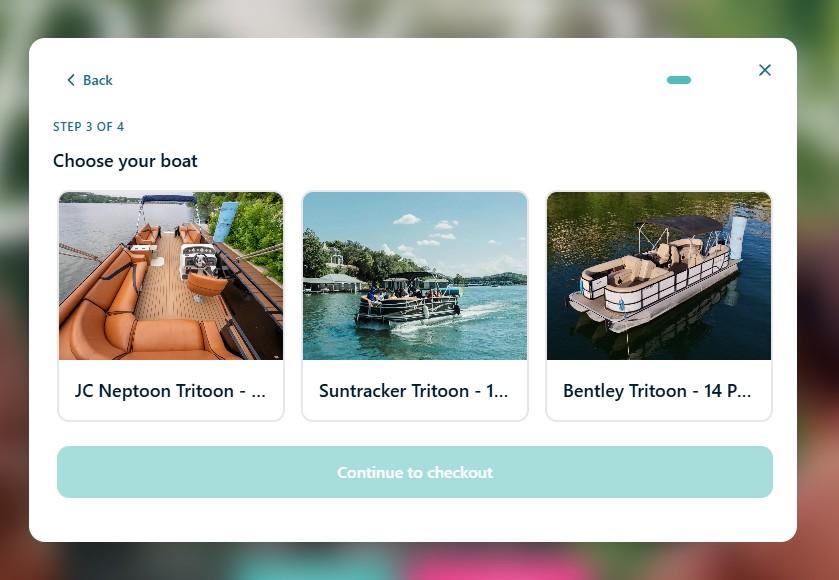
After intake we stand up the site and booking with your trips, boats, and deposit rules. Guests never bounce to a marketplace checkout to finish the reservation.
01
Trip, date, boat, party size. The hold exists so two browsers cannot take the same slot while someone is paying.
02
Deposit, pay in full, or a supported installment method into your Stripe. You are the merchant of record. Payouts land in your account. Slipstack never sits on the money. Lender approval is not Slipstack’s.
03
The rest charges before the trip unless they already paid in full. The signing link rides with that reservation — not a paper stack in a drawer.
07 — Cost
Slipstack Full is a custom quote with 0% booking commission. Stripe still charges card processing. Installment methods may add lender fees the guest sees at checkout — that is the lender, not a Slipstack cut. A marketplace that takes a percentage of the trip is a different line item — keep it out of the deposit conversation or you will lie to yourself about margin. The business plan and booking software pages split those costs the same way.
Also see boat rental booking software, boat rental software, agreements and waivers, boat rental business plan, charters, then shows, after-booking guest email, how launch works, and pricing.
FAQ